Charging a company car at home offers many advantages, including convenience, lower electricity costs, and maximum flexibility. However, since the beginning of 2024, there has been a regulation that homeowners and company car drivers should be aware of when installing a wallbox: Section 14a of the German Energy Industry Act (EnWG).
In this article, you’ll learn what Section 14a EnWG is about, which wallboxes are affected, and how the regulation impacts charging company cars at home.
What Does Section 14a EnWG Regulate?
As electric vehicles, heat pumps, and battery storage systems become more widespread, the demand on local electricity grids continues to increase. To prevent local grid congestion, Germany’s Federal Network Agency (Bundesnetzagentur) has introduced new requirements for so-called controllable consumption devices. These include private EV charging stations (wallboxes).
Since January 1, 2024, grid operators have been permitted to temporarily reduce the power consumption of certain devices if there is an imminent risk of overloading the local electricity grid. In return, users receive financial benefits in the form of reduced grid fees.
The aim is not to prevent electric vehicles from being charged. Rather, the regulation ensures that new wallboxes can continue to be connected to the grid without compromising grid stability.
Which Wallboxes Are Affected?
The regulation applies to newly installed controllable consumption devices with a power rating above 4.2 kW. This includes many private wallboxes used to charge electric company cars at home.
Anyone installing a new wallbox today should therefore ensure that it complies with the requirements of Section 14a EnWG. Many modern wallboxes are already equipped for compliance or can be integrated into grid operator control systems. Support for Section 14a EnWG has also become a common feature of many smart wallboxes.
Download our charge@home Guide now!
Our guide highlights the requirements for a home charging solution and explains what is needed to use it for legally compliant billing of company cars. Learn more about the installation of wallboxes, legal frameworks, and efficient billing solutions for home charging.
REQUEST GUIDE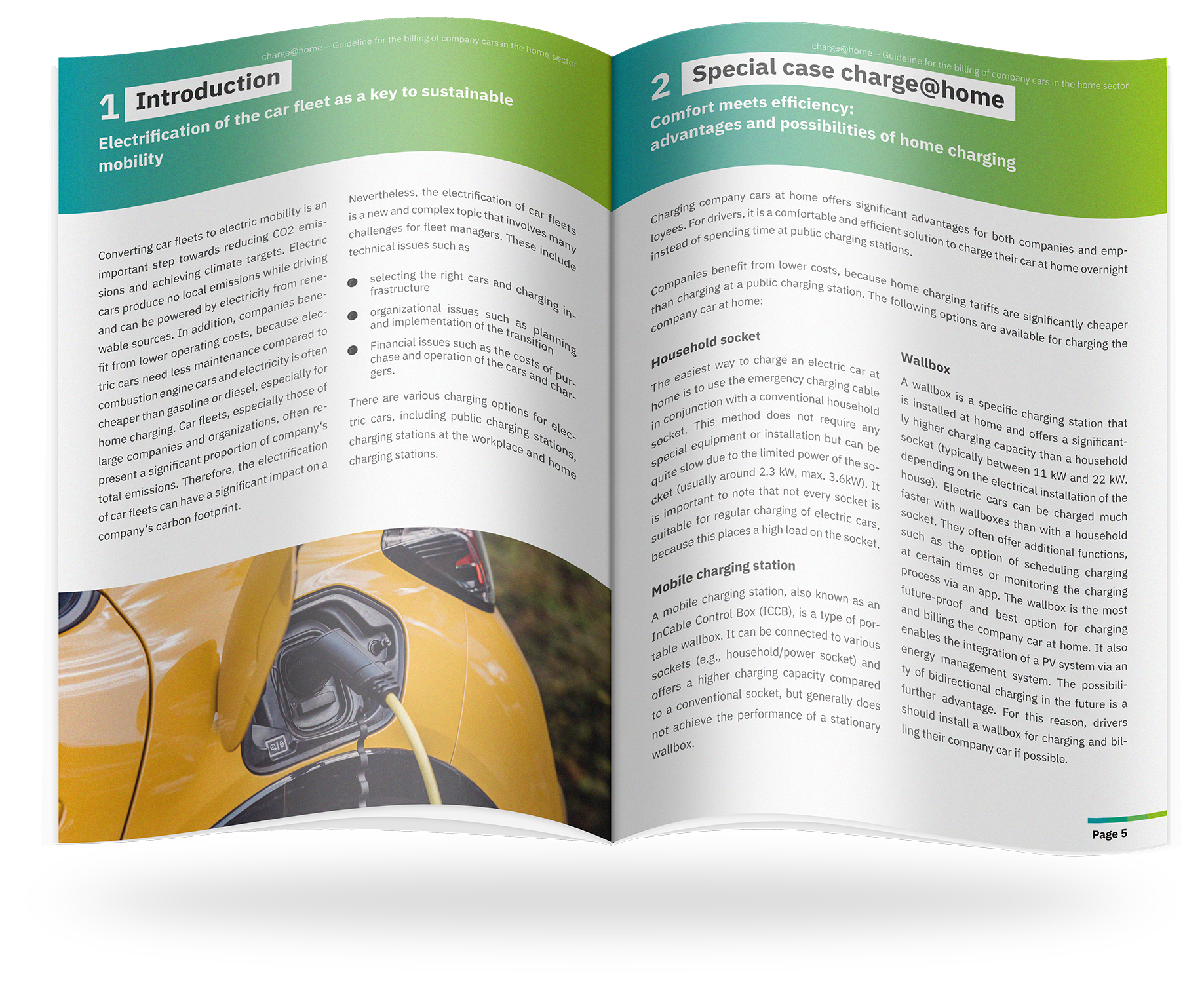
Can the Grid Operator Switch Off My Wallbox?
One of the most common concerns among EV drivers is the fear that grid operators could completely stop their vehicle from charging.
In reality, Section 14a EnWG does not allow a complete shutdown. Instead, charging power may only be reduced to a minimum charging capacity of 4.2 kW when necessary. The vehicle will continue charging, just at a lower speed.
It is also important to understand that such interventions are only permitted in exceptional situations when there is a genuine risk of overloading the local electricity grid. For most households, this will hardly be noticeable in everyday life.
Is 4.2 kW Charging Power Sufficient?
For many company car drivers, the answer is yes.
Anyone charging their vehicle overnight typically has several hours available for charging. Even at a reduced charging rate, a significant amount of energy can be replenished during that time. Most daily commuting distances can easily be covered this way.
For companies, this means that the new regulation generally does not create a barrier to home charging. It simply changes the technical requirements that must be considered when installing new wallboxes.
What Are the Benefits of Section 14a EnWG?
In addition to improving grid stability, consumers benefit from reduced grid fees. These financial incentives are designed to encourage the integration of controllable consumption devices into a smarter and more flexible energy system.
Depending on the local grid area, this can lower the ongoing operating costs of a wallbox. Employees who regularly charge their company car at home may therefore benefit in two ways: through reimbursement of charging costs by their employer and through lower grid fees.
What Does Section 14a EnWG Mean for Fleet Managers?
Home charging is becoming increasingly important for fleet managers. More and more employees charge their company vehicles at home and expect a simple and transparent reimbursement process.
When selecting suitable wallboxes, companies should therefore consider not only the requirements for electricity consumption measurement but also the technical requirements of Section 14a EnWG.
Especially during larger rollouts, it is advisable to provide employees with information on the following topics at an early stage:
Wallbox requirements
Registration with the local grid operator
Controllability according to Section 14a EnWG
Requirements for electricity cost reimbursement
Legally compliant and certified energy consumption measurement
Providing clear guidance early on can help avoid questions later and reduce additional installation costs.
Why Accurate Energy Consumption Measurement Remains Essential
Section 14a EnWG regulates the controllability of wallboxes. However, when it comes to reimbursing electricity costs for charging a company car at home, another aspect is equally important: accurate measurement of energy consumption.
Companies must be able to verify how much electricity was actually used to charge the company vehicle. Therefore, when selecting a wallbox, it is important not only to consider the grid operator’s requirements but also to choose a solution that provides transparent and legally compliant consumption data. With the Charge Repay Service from Phoenix Contact , companies can easily reimburse charging costs based on the actual energy consumed. Feel free to contact us for more information.
Conclusion
Section 14a EnWG changes the framework conditions for new wallboxes but does not make charging company cars at home more complicated. The regulation is designed to ensure that many new charging points can continue to be connected to the electricity grid without jeopardizing grid stability.
For company car drivers, the practical impact will usually be minimal. For fleet managers, however, it is an opportunity to take a holistic approach to home charging by considering both technical requirements and reimbursement processes from the outset.
If you are planning to install a new wallbox for charging company vehicles at home, you should consider not only the requirements of Section 14a EnWG but also the need for transparent and compliant electricity cost reimbursement.
Would you like to learn more about the Charge Repay Service? Book a non-binding consultation with one of our experts today: Schedule an appointment