Charging company electric vehicles (EVs) at home has now become standard practice for many companies and employees. However, it is much less clear how the resulting electricity consumption can be billed correctly and in a legally compliant way.
With the latest letter from the German Federal Ministry of Finance dated 11.11.2025, the tax assessment has been further specified. At the same time, metrology regulations—particularly through the AGME (updated information sheet dated 09.01.2026)—are clarifying the technical requirements for measurement solutions.
As a result, many companies are now asking: Which solution is permissible and which will also withstand an audit?
Federal Ministry of Finance (BMF) and metrology law: not a contradiction, but an interaction
The BMF clarifies that electricity costs for a company car charged at home can only be reimbursed if they have been specifically measured. The key requirement is a traceable, kilowatt-hour (kWh) accurate recording of charging electricity.
At the same time, the letter deliberately leaves open the technical implementation. This is exactly where metrology law comes into play, defining the requirements for measuring devices.
Simply put:
The BMF requires measurement-based billing
Metrology law requires tamper-proof and certified measurement
For companies, this means: A solution is only truly compliant if it satisfies both perspectives.
Overview: What billing solutions are available?
In practice, several approaches have become established, which differ significantly in effort, accuracy, and legal certainty.
1. Separate electricity meter
A classic approach is installing an additional electricity meter that exclusively records charging electricity. This solution is relatively easy to implement and is often used in private households.
Typical characteristics:
Measurement of actual electricity consumption
Separation from household consumption
Usually manual reading
In practice, however, this approach quickly reaches its limits. Manual recording is prone to errors and creates administrative effort. In addition, not every meter is automatically calibrated, which can be relevant in tax audits.
This is practical for individual vehicles, but only conditionally suitable for larger fleets.
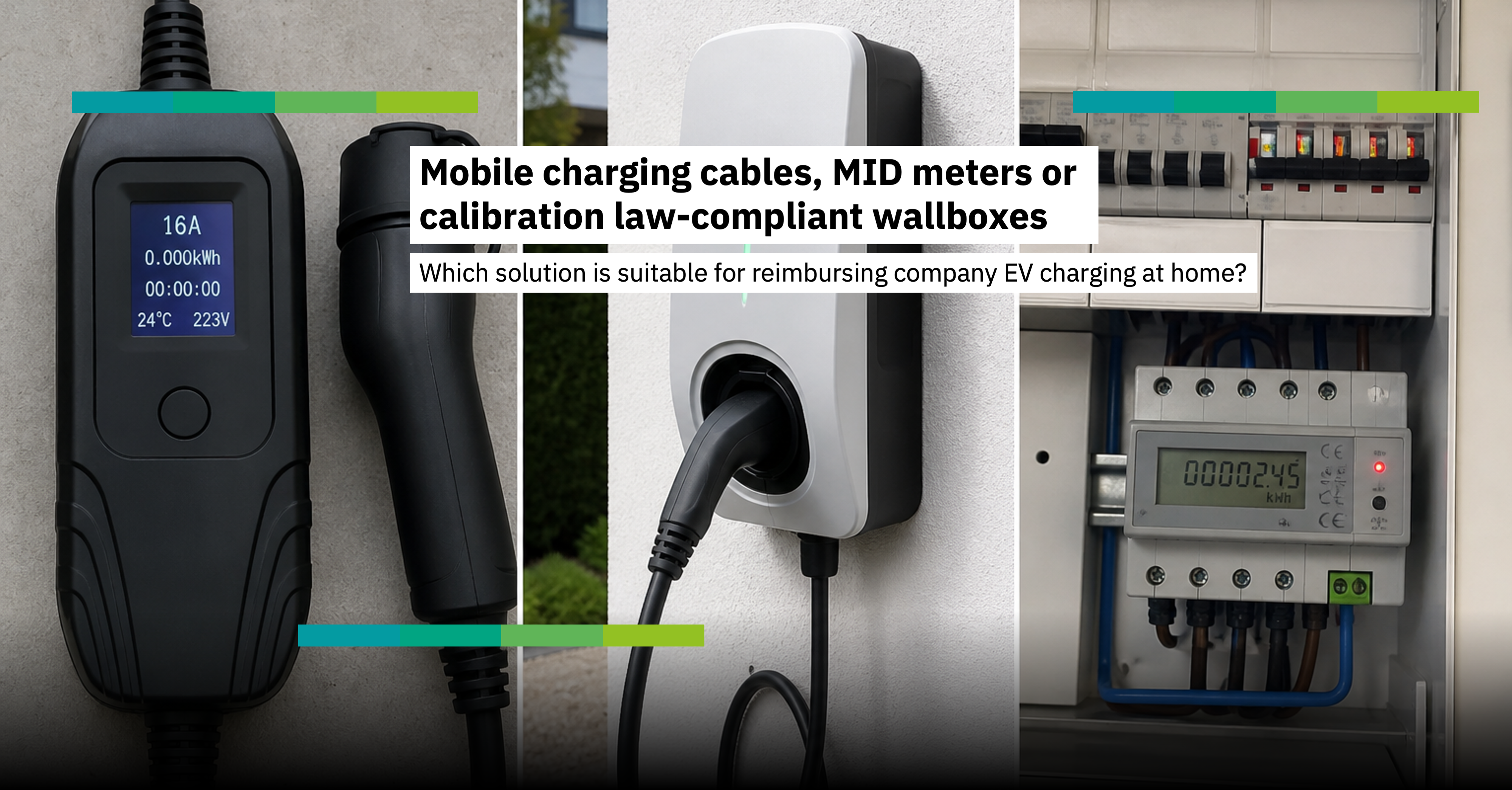
2. Wallbox with MID meter
Many companies rely on wallboxes with integrated MID meters, as they enable automated recording of charged energy amounts.
Advantages:
Automatic kWh measurement
Easy integration into existing infrastructure
Widely available on the market
However, it is often overlooked that MID meters do not automatically meet all requirements of metrology law. The AGME points out that additional criteria apply for billing-relevant processes.
The most important requirement for using a MID meter is that only company car charging is measured by that meter.
MID wallboxes are therefore a solid intermediate solution but do not always provide full legal certainty.
3. Mobile charging cables and portable wallboxes
Mobile charging solutions are gaining increasing attention because they offer maximum flexibility. They can be used without installation and are suitable both at home and on the road.
Typical features:
No fixed installation required
Flexible use at different locations
Partially with integrated meter
From a regulatory perspective, however, the assessment is more complex. While the BMF does not fundamentally exclude such solutions, metrology law sets clear requirements for the measuring devices used.
For mobile solutions, this means specifically:
They must be certified as measuring devices of category 6.8
Measurement must be compliant with metrology law and tamper-proof
MID meters in charging cables are explicitly not permitted according to AGME
Current status: There are currently no widely available solutions known that meet these requirements.
This means mobile charging devices are currently only limitedly suitable for legally compliant billing of company car charging at home.
4. Billing via vehicle interfaces
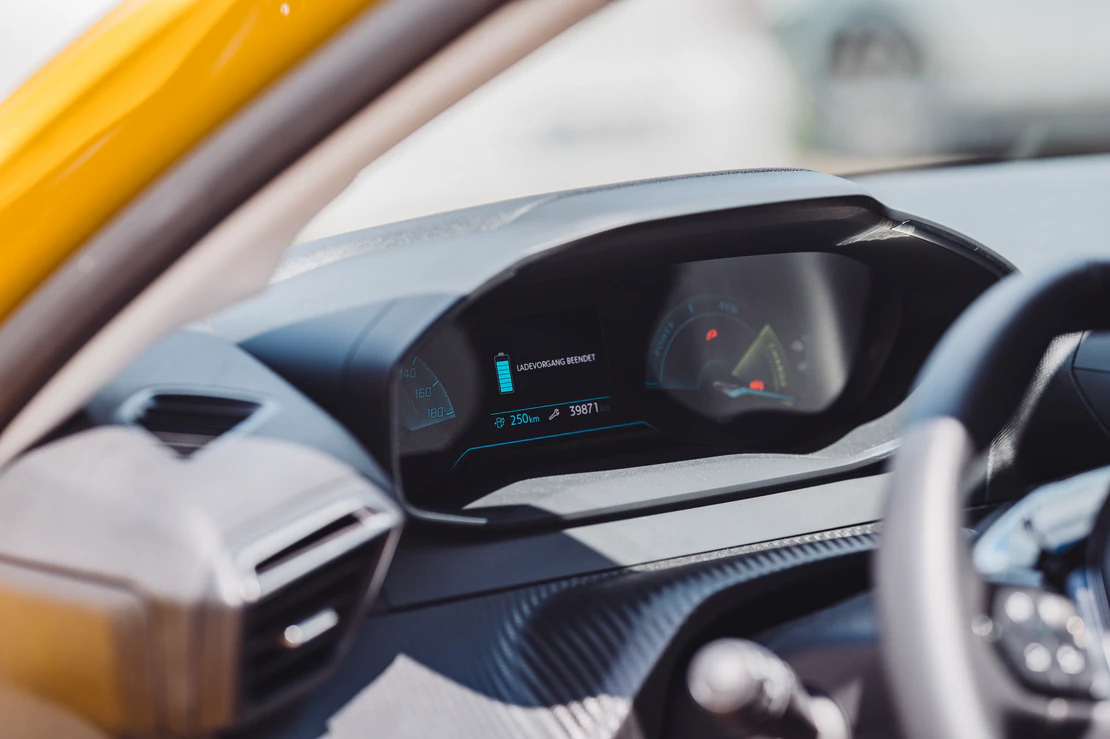
Some providers rely on evaluating vehicle data to record charging processes. This solution appears particularly attractive as it requires no additional hardware.
Typical advantages:
Simple implementation
Low investment costs
Good scalability
However, there are clear limitations:
No metrology-compliant measurement
Lack of tamper resistance
Limited auditability
This solution is mainly suitable for monitoring and analysis, but not for tax-compliant billing.
5. Metrology-compliant wallboxes
Metrology-compliant wallboxes are currently considered the most reliable approach for billing charging electricity at home. They are specifically designed to perform billing-relevant measurements.
Characteristics:
Calibrated and certified electricity meters
Tamper-proof data recording
Transparent and auditable measurement values
As a result, they meet both BMF requirements and metrology law regulations.
For companies aiming for long-term legal certainty, this is currently the most stable approach. However, investment in a metrology-compliant wallbox is costly, and many company car drivers already have non-compliant wallboxes installed that would need to be replaced.
6. Digital billing with solutions such as Charge Repay Service
In addition to measurement itself, billing is increasingly becoming the decisive factor. This is exactly where digital solutions such as Charge Repay come in.
They combine:
Metrology-compliant measurement via compliant wallboxes or hardware retrofits
Automated recording of charging processes
Direct billing without manual intermediate steps
Benefits for companies:
Significantly reduced administrative effort
Fewer sources of error
Transparent and traceable processes
Especially for growing fleets, this aspect becomes crucial, as manual solutions quickly reach their limits.
Which solution is the right one?
The choice of the appropriate billing solution strongly depends on the specific use case. While simple solutions may be sufficient for individual cases, requirements for processes and legal certainty increase with the number of vehicles.
In summary:
Simple meter solutions are cost-effective but not very scalable
MID wallboxes offer convenience but limited legal certainty
Mobile solutions are flexible but currently regulatorily problematic
Vehicle data is practical but not suitable for billing
Metrology-compliant systems offer the highest level of security
In practice, the market is clearly moving toward standardized, metrology-compliant, and digital solutions.
Conclusion: billing company EV charging at home is becoming a compliance issue
Billing company electric vehicles charged at home is no longer purely a technical topic; it is increasingly becoming a matter of compliance.
The interaction between tax regulations and metrology requirements means that companies should critically reassess their existing solutions. Especially as the number of electric vehicles grows, a structured and legally compliant solution becomes essential.
Those who invest today in the right infrastructure not only create clarity in billing but also reduce long-term risks and administrative effort.