Switching to electric vehicles in your company fleet is an important step towards sustainability and efficiency. But how does billing for charging costs work when your employees charge their company cars at home? We have the answers for you.
1. (Valid until December 31, 2025) Flat Rates: Simple and Convenient – But Is It Fair?
A common method for reimbursing charging costs was the use of flat rates. For fully electric vehicles, they typically amounted to €30 per month, and for plug-in hybrids €15. These flat rates could be reimbursed tax-free but rarely covered the actual charging costs. The method was simple and required little administrative effort. However, the question arose whether flat rates were truly fair, as they did not always reflect the actual costs.
Note: This option will be discontinued as of January 1, 2026.
2. New from 2026: Electricity Price Flat Rate
With the elimination of monthly flat rates at the end of 2025, the question is: How can companies continue to reimburse charging costs easily and in compliance with tax regulations? One solution is the electricity price flat rate.
It is based on the average household electricity price for the first half of the previous year, published by the Federal Statistical Office (Destatis). For 2026, this value is around €0.34/kWh. Companies multiply this price by the verified amount of electricity consumed—resulting in a transparent and tax-free expense reimbursement.
- Important: The electricity price flat rate applies for the period 2026 to 2030 and requires proof of the charged kWh. This can be provided via a stationary meter, a mobile meter, or the vehicle’s internal electricity meter.
Compliance with calibration law according to MessEG
An important requirement for charging company electric vehicles at home is compliance with the calibration law according to the Measurement and Calibration Act (MessEG). This ensures that the measurements of the charged energy are correct and reliable, which is essential for fair billing. Compliance with the calibration law is required for the following options. More information can be found in our article: “Legally Compliant Charging at Home. ”
3. Accurate manual billing by kilowatt-hour: For the detail-oriented
A more accurate method is the manual billing of the actually charged kilowatt-hours. Your employees record the power consumption themselves, for example by regularly reading an intermediate meter or exporting data from the wallbox. The collected data is then submitted to the employer for reimbursement. This method has the advantage of accurately reflecting the actual costs, but it requires precise documentation and possibly additional technical equipment. A disadvantage of this method is the increased administrative effort associated with manual recording and billing.
Download our charge@home Guide now!
Our guide highlights the requirements for a home charging solution and explains what is needed to use it for legally compliant billing of company cars. Learn more about the installation of wallboxes, legal frameworks, and efficient billing solutions for home charging.
REQUEST GUIDE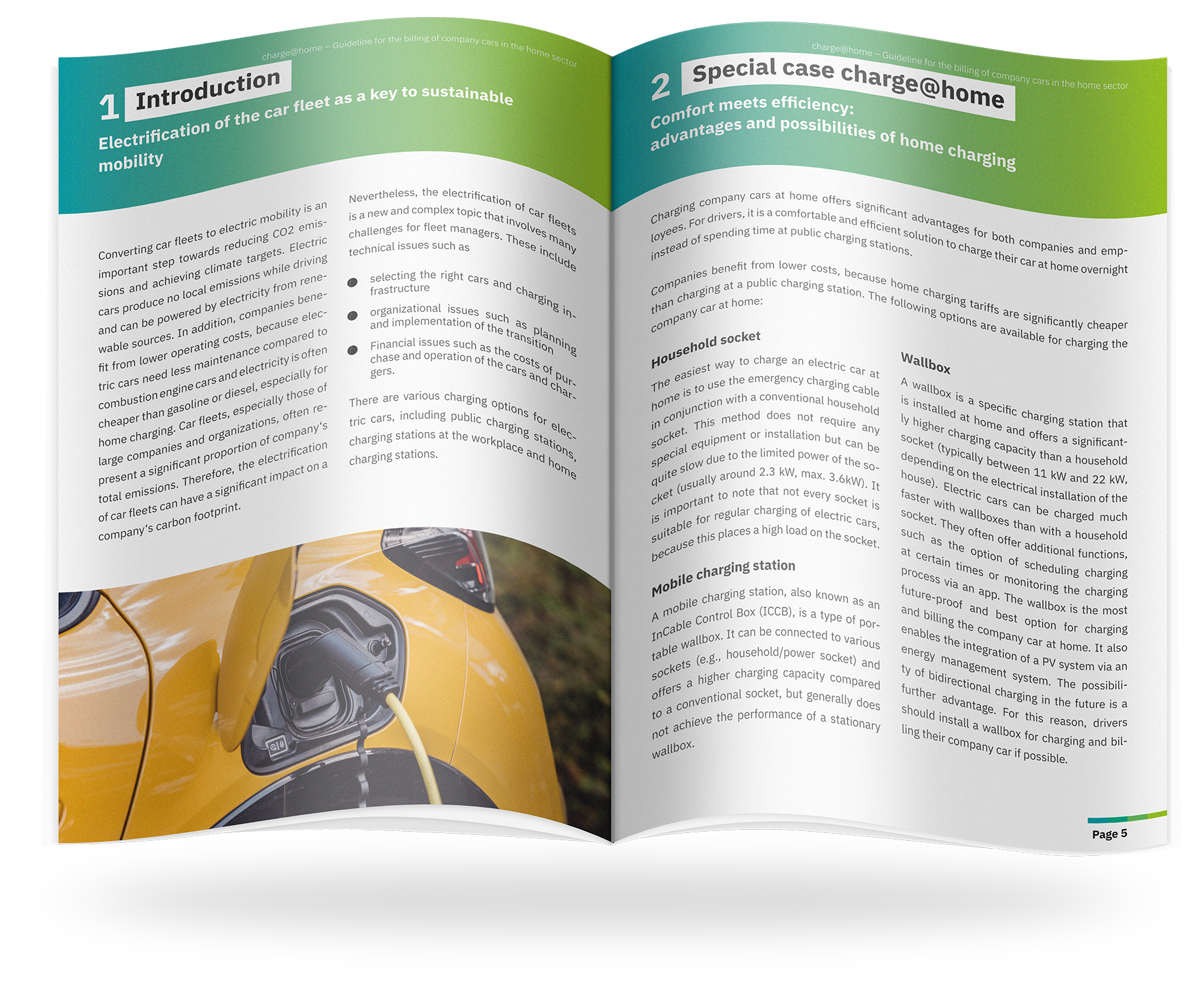
4. Automatic recording and billing: The smart solution
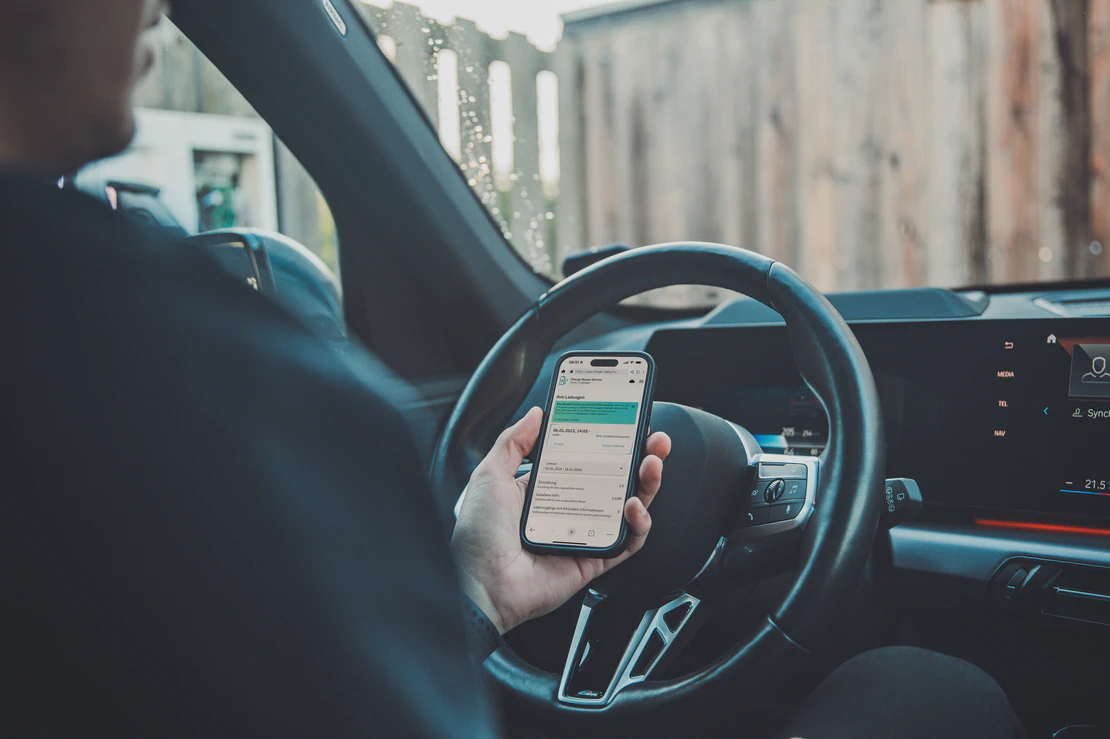
The most modern and efficient method is the automatic recording and billing of charging costs. This involves using a wallbox with a suitable energy meter (at least MID-certified or calibration-compliant) and an RFID function for clear user identification. These wallboxes are usually OCPP-compatible and can communicate with a backend system that automatically records and bills the charging processes. This method enables precise and transparent billing without additional effort for the employees. Many providers limit the selection of wallboxes to certain models they support. With Phoenix Contact ’s Charge Repay Service, you can precisely and efficiently bill the charged kilowatt-hours for your company vehicles. The service enables transparent and accurate recording of charging processes, regardless of the wallbox used. Phoenix Contact’s patented retrofit solution also allows non-calibration-compliant wallboxes to be connected. This is particularly advantageous for those who have already installed a simple, non-calibration-compliant wallbox at home through KfW funding. This makes billing flexible and sustainable for both employers and employees.
Conclusion
The choice of billing method depends on the individual needs and technical possibilities of your company. Flat rates offer a simple solution, while manual billing provides a more accurate cost breakdown. Automatic recording and billing represent the most modern and efficient method, minimizing administrative effort while ensuring precise billing. With Phoenix Contact’s Charge Repay Service, you can ensure that billing for charging costs is both flexible and sustainable, regardless of the wallbox used. If you need further information on this topic, please visit our page “Charging and billing company cars at home. ”